- BrainFlow Weekly
- Posts
- Mindfulness & Wellness - Brain-Based Stress Biomarkers—What Is Your Default Mode Telling You? 🧠⚡
Mindfulness & Wellness - Brain-Based Stress Biomarkers—What Is Your Default Mode Telling You? 🧠⚡
In partnership with

Your Weekly Calm & Science Update
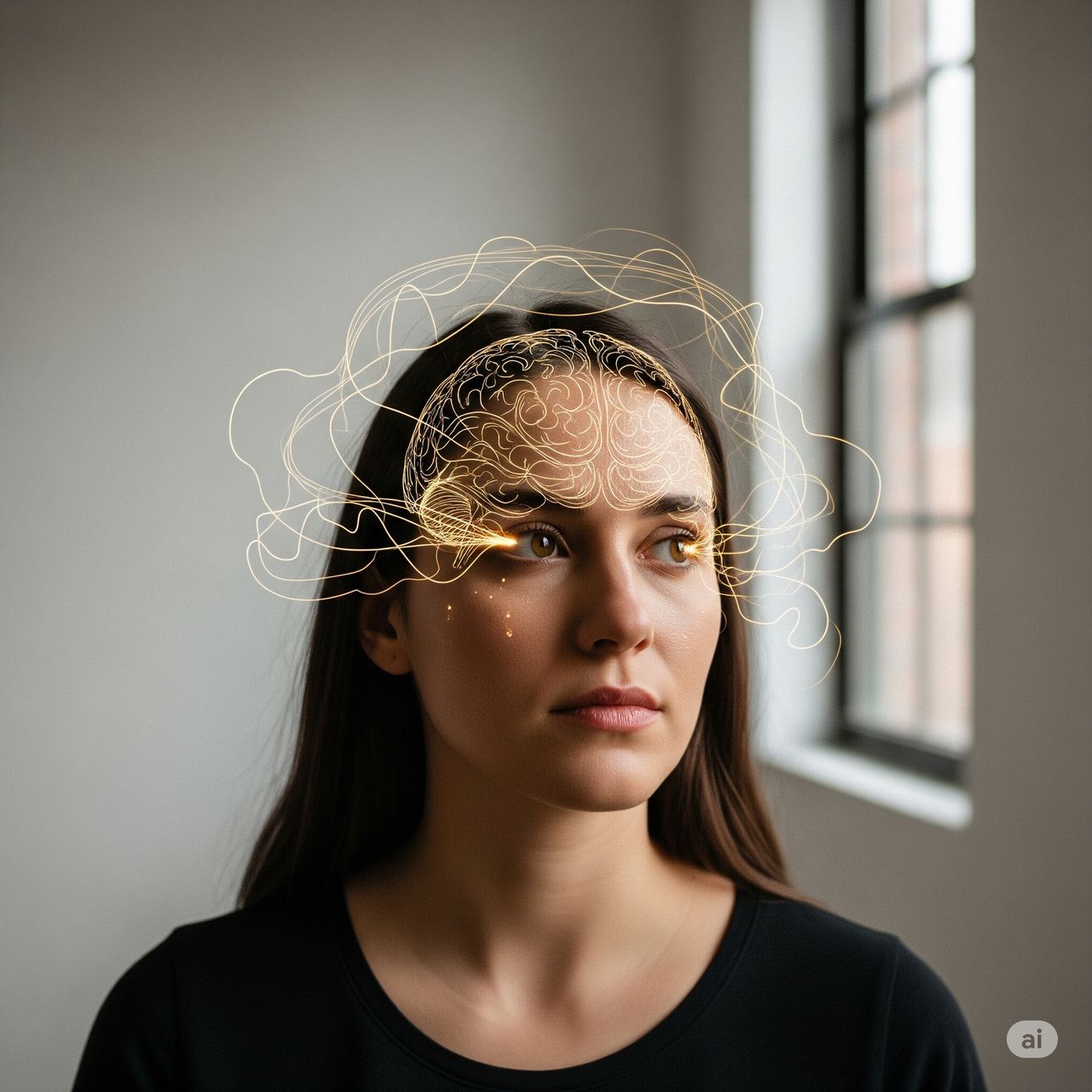
Hi, curious brain! Welcome to your weekly dose of well-being and neuroscience. Today we head into the lab to see how a few brain-and-body biomarkers forecast your stress load—and what simple actions can “re-tune” them. Take a deep breath… and let’s start this self-diagnostic journey!
Looking for unbiased, fact-based news? Join 1440 today.
Join over 4 million Americans who start their day with 1440 – your daily digest for unbiased, fact-centric news. From politics to sports, we cover it all by analyzing over 100 sources. Our concise, 5-minute read lands in your inbox each morning at no cost. Experience news without the noise; let 1440 help you make up your own mind. Sign up now and invite your friends and family to be part of the informed.
Weekly Wellness Challenge
When the Default Mode Network (DMN) over-connects with the amygdala and medial prefrontal cortex, the result is usually rumination, fatigue, and scattered focus. Outside the skull, heart-rate variability (HRV) and salivary alpha-amylase work as near-instant thermometers of stress reactivity. The DMN + HRV duo is emerging as a mental-health fingerprint in 2024-25 studies.

Science Spotlight
Meta-analysis 2025: Across 2100 participants and 48 fMRI studies, DMN-amygdala connectivity explained 28 % of the variance in rumination and mental fatigue scores.
Longitudinal study 2024: Low HRV plus a hyper-connected DMN predicted clinical burnout six months later among healthcare workers (AUC 0.81).
Student RCT 2025: Five weeks of 12-min daily “thought-labeling” raised HRV 18 % and normalized DMN-executive connectivity; morning cortisol dropped 12 %.
Nature Reviews 2024: Proposes a translational dashboard: HRV > 60 ms and balanced DMN–salience networks mark the “optimal recovery window” for learning and creativity.

Take-away: Your heart and brain tell the same story; when one is off, so is the other. Tracking both gives a clear map for intervention.
Train
Guided Practice (12 min)
“Label & Release”
Set-up: timer ready, comfortable upright posture.
0-2 min—Three 5-5-5 breaths; feel your pulse.
2-10 min—Each time a thought arises:
Name it softly (“plan,” “memory,” “worry”).
Exhale and picture it floating away like a balloon.
10-12 min—Hand on chest; count 30 heartbeats and notice if the rhythm eases.

Habit
Micro-habit of the week
Before your first coffee, spend 60 s checking your HRV with a smartwatch or app. Log the value and mark it with a green emoji (≥ 60 ms) or red (< 60 ms). A simple traffic-light that reminds you to adjust the day’s load.

Bonus
Geek Corner
Polar H10 + Elite HRV – Records RMSSD in just two minutes, letting you see micro-shifts after each labeling session.
Muse S Gen 2 – A home EEG that tracks DMN “drift,” perfect for verifying whether your mind-wandering actually drops.
Fun fact – A 2025 study found that combining HRV with DMN metrics predicted anxiety relapse better than classic stress questionnaires (DASS-21).
Share
Wellness for all!

Which biomarker feels easiest for you to track—HRV, home cortisol kits, or self-rated rumination? Hit reply with the keyword and you’ll get an advanced tip for that indicator tomorrow. Your challenges steer future issues!
Forward this email to anyone stuck on “autopilot”
Thanks for gifting yourself these minutes of presence.
May your week blend calm, plasticity, and metrics that motivate. See you next Tuesday for “Nutrition & Synaptic Plasticity.” Until then, keep observing your mind kindly and let science walk beside you.
Neural hugs,
— The BrainFlow Team

The best HR advice comes from those in the trenches. That’s what this is: real-world HR insights delivered in a newsletter from Hebba Youssef, a Chief People Officer who’s been there. Practical, real strategies with a dash of humor. Because HR shouldn’t be thankless—and you shouldn’t be alone in it.